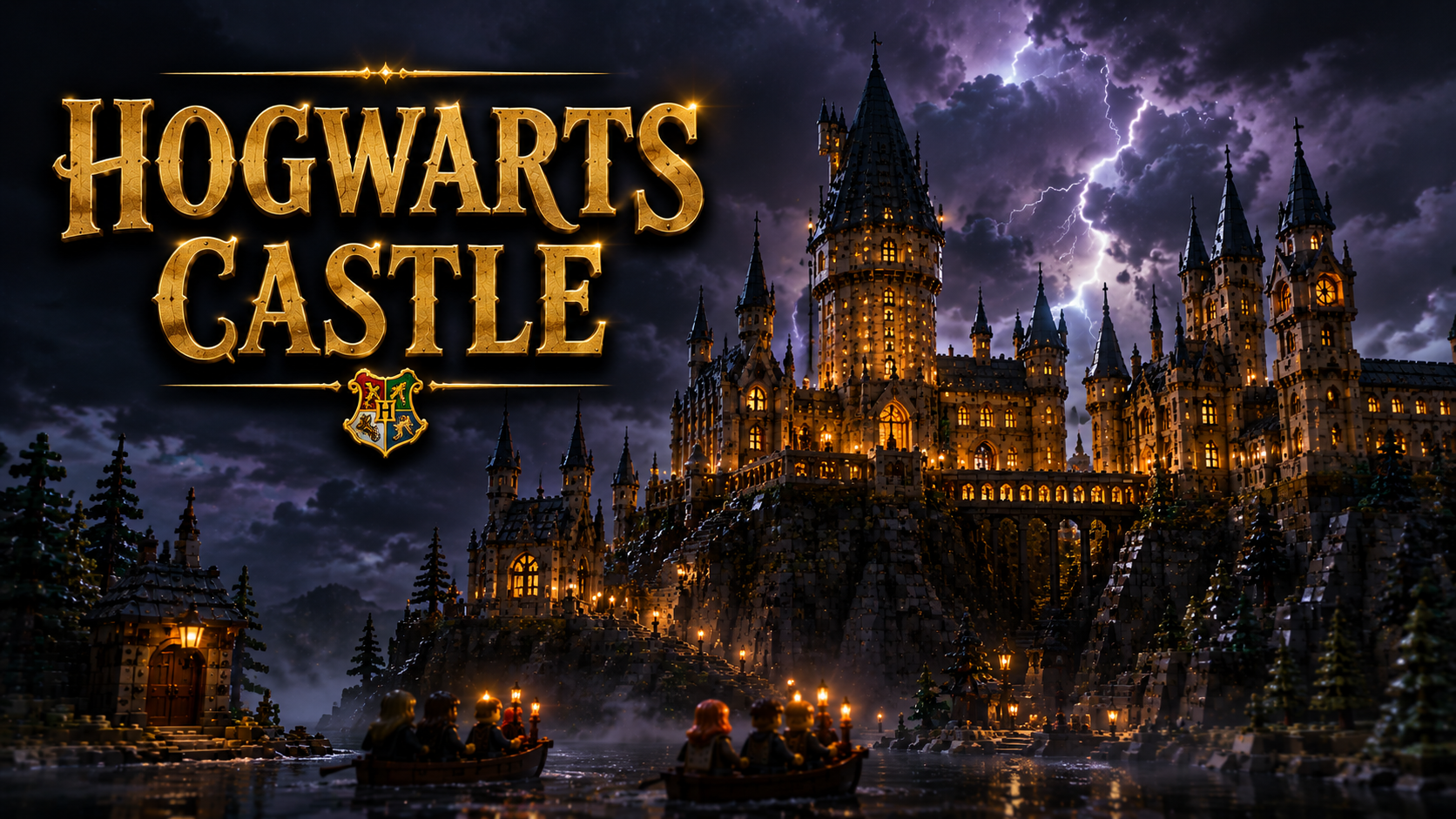
There are places in the world that seem to exist slightly outside of it, places where the ordinary rules of geography, of architecture, even of time, appear to have been negotiated rather than enforced. Hogwarts School of Witchcraft and Wizardry is such a place. It stands on a promontory above a lake in the Scottish Highlands, occupying a position that does not appear on Muggle maps and cannot be reached by Muggle roads, and it has stood there, in some form, under some name, serving some version of its present purpose, for over a thousand years.
A Thousand Years of History
The founding of Hogwarts is attributed to four witches and wizards of exceptional skill: Godric Gryffindor, Helga Hufflepuff, Rowena Ravenclaw, and Salazar Slytherin, whose names became the four houses of the school, each reflecting the qualities its founder most valued.
Over the generations that followed, the castle grew. Each headmaster and headmistress left some mark, a new tower commissioned for an expanding library, a courtyard added to accommodate an increase in students, a wing rebuilt after one of the periodic disasters that attend any institution of magical education. By the time the Statute of Secrecy made the formal separation of the wizarding and Muggle worlds official policy, Hogwarts had already been practicing discretion for centuries.
The Castle Itself
What a student arriving for the first time sees, crossing the lake by boat at dusk, looking up at the towers lit from within against the autumn sky, is a castle that seems almost too large to be real. This impression is correct. The interior is significantly larger than its exterior would suggest. Rooms appear and disappear. Staircases change direction between Monday and Wednesday.
The Great Hall is the communal heart of castle life, a vast vaulted space whose ceiling reflects the sky outside through an enchantment of elegant simplicity, where four long house tables run the length of the room.
The Astronomy Tower is the tallest structure on the castle's east face, exposed to wind at all hours and worth every step of the climb on a clear night. The Owlery occupies a stone tower near the North Wing, open to the sky at every level, perpetually in need of a cleaning that no one has ever quite managed to complete.
The Forbidden Forest begins where the lawns end and ends somewhere that no student is supposed to know about. The Quidditch pitch occupies a broad expanse behind the stadium stands that have been expanded, rebuilt, and argued over in every decade of the school's existence.
A Place That Remembers
One of the stranger qualities of Hogwarts is the sense that the castle itself is aware of what happens within it. Not sentient, exactly. Not watching. But remembering. The walls hold impressions of the centuries that have passed inside them. The common rooms carry the warmth of generations of students who have sat in them arguing about homework and falling asleep by the fire.
What We're Building
The Hogwarts Castle Diorama
The Hogwarts Castle diorama follows the official LEGO modular Hogwarts system, built in release order so viewers can watch the castle grow across the playlist from foundations to finished skyline. Each new set is reviewed first, then placed into the diorama in its intended position, expanding the school piece by piece. The goal is a complete, displayable castle, every module connected, the grounds growing outward from the walls, the lake eventually represented in the foreground. It's a long build. Hogwarts always has been.