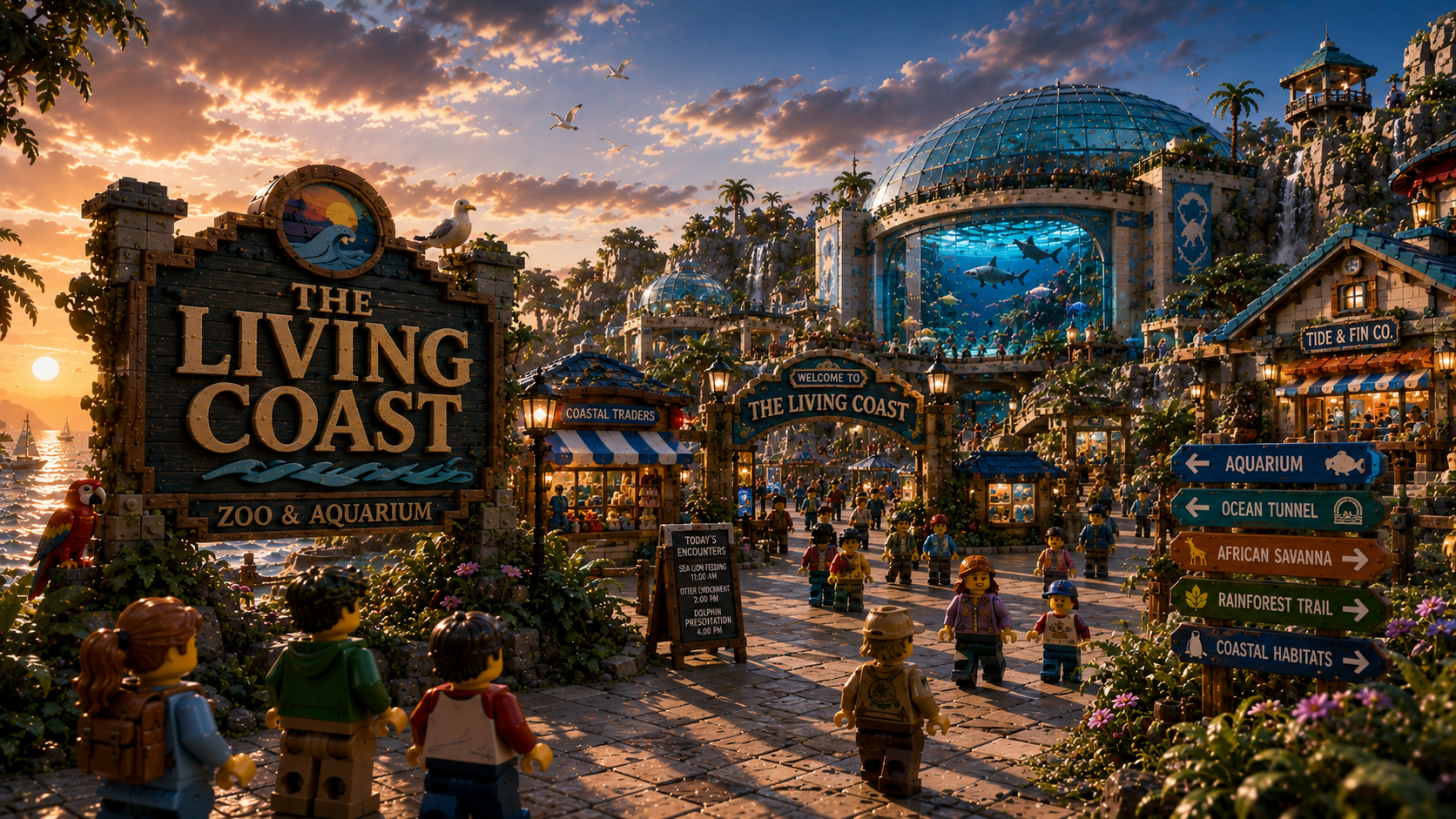
There is a moment, familiar to anyone who has visited The Living Coast more than once, that occurs somewhere in the transition between the entrance pavilion and the first exhibition hall, a specific quality of light, cooler and more diffuse than the light outside, combined with the ambient sound of moving water and the particular humidity that aquatic environments produce. People slow down. Shoulders drop. The particular kind of attention that the outside world requires gives way to a different kind: slower, more open, genuinely curious. The staff have a name for it, the shift, and regard it as the core of what they do.
History and Mission
The Living Coast began as a fish market, or more precisely, the Coastal Research and Display Facility established in 1887 as a combination of working fisheries laboratory and public exhibition space. Over the following decades the facility evolved, expanding from native species displays to a comprehensive exploration of marine life as an interconnected system. The marine mammal program began in the 1940s with a pair of rescued harbor seals that proved, rather conclusively, that people would travel a meaningful distance to watch seals.
The zoo component developed in the 1960s as an extension of the institution's conservation mission, a complement to the aquarium's coastal ecosystem focus, telling the story of the coast above the waterline as the aquarium tells it below.
The Aquarium
The aquarium's main facility is organized around the concept of depth, the visitor descends through the facility as through the water column.
The Coastal Gallery, at the entrance level, covers the inter-tidal zone, salt marshes, and estuaries. The touch pool, a shallow tank where visitors can handle sea stars, horseshoe crabs, and small rays, is the single most popular exhibit in the building and has been since it opened in 1952.
The Open Ocean Hall is the facility's architectural showpiece. The main tank, three stories tall, containing over a million gallons of seawater and a self-sustaining ecosystem of sharks, rays, and sea turtles, was the most expensive single construction project in the institution's history and has been worth it by every measure.
The Deep Sea Gallery, at the facility's lowest level, is the darkest and strangest part of the building. The bioluminescent display produces the most profound silence of any exhibit in the building. People tend not to talk in there, and when they do, they speak quietly.
The Coastal Reserve
The terrestrial component occupies the bluff above the aquarium building, 340 acres of protected coastal habitat supporting resident wildlife and the managed animal populations in the formal zoo areas. The river otters that moved into the wetland in 2019 and have shown no inclination to leave are considered by the staff to be the best thing that has happened on the property in years.
What We're Building
The Living Coast Diorama
The Living Coast diorama is the channel's most aquatically ambitious project, tanks with lit interiors, the blue-green glow of deep-water exhibits, the wildlife areas on the bluff above. We're building it to capture the feeling of that moment, the shift, when you walk in from the outside world and something in you slows down and opens. The ocean has a lot to say. We're building a place to listen.